
50/30/20 Budget Rule in India (2026):
Simple Guide for Beginners
Are you a young professional in India who just got their first salary and has no idea where the money disappears every month?
You’re not alone.
According to a 2025 nationwide survey, only 57.6% of Indians track their expenses and follow a budget regularly. That means more than 40% of salaried professionals, especially first-jobbers, are still living paycheck to paycheck, With inflation around 2.75% in early 2026 and rent touching ₹12,000–₹18,000 for a 1BHK in many tier-2 cities, managing your salary properly has become more important than ever.
The good news? There’s a simple method that works perfectly for beginners in India — the 50/30/20 rule.
In just 10 minutes, you can create your first monthly budget and start saving ₹5,000–₹15,000 every month. In this guide, you’ll learn how to use the 50/30/20 rule in India with real salary examples (₹30k, ₹40k & ₹50k), plus a free downloadable template to get started.
What is the 50/30/20 Rule? (Simple Breakdown)
The 50/30/20 rule was introduced by US Senator Elizabeth Warren and is now one of the most popular budgeting methods for beginners worldwide — including India.
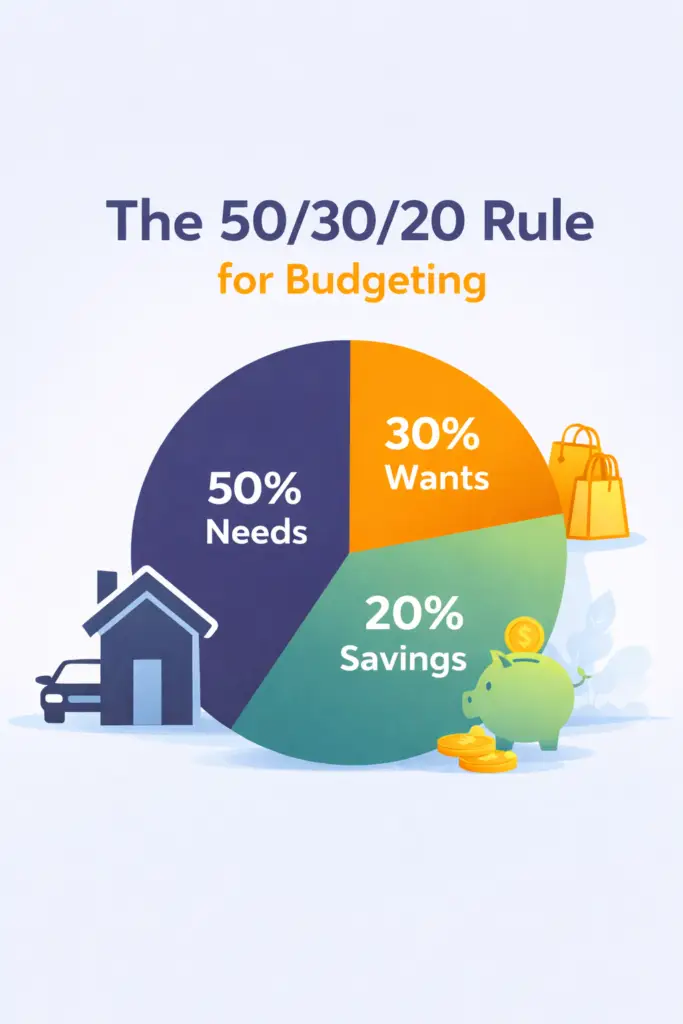
It divides your take-home salary (after tax and deductions) into three categories:
- 50% → Needs (essential expenses)
- 30% → Wants (lifestyle spending)
- 20% → Savings & Debt Repayment (your future)
Let’s understand each category with an Indian context.
50% – Needs (Rent, Food, Bills, Transport)
Needs include expenses that are necessary for basic living.
Examples in India:
- Rent
- Groceries and home-cooked meals
- Electricity, water, and internet
- Transport (fuel, metro, bus)
- Insurance and EMI payments
- Mobile bills
30% – Wants (Dining Out, Shopping, Entertainment)
This category includes lifestyle expenses that improve your quality of life but are not essential.
Examples:
- Dining out or food delivery
- Movies, Netflix, Spotify
- Shopping for clothes or gadgets
- Weekend trips
- Coffee at cafes
20% – Savings & Debt Repayment
This portion of your salary helps build your financial future.
Use it for:
- Emergency fund (target: 6 months of expenses)
- SIP investments in mutual funds
- Credit card or loan repayment
- Retirement planning (NPS or PPF)
- Future goals like buying a house or vehicle
Why the 50/30/20 Rule Works Well in India
Although the rule originated in the US, it adapts well to Indian salaries and living conditions.
- Works for both low and high salaries
- Helps manage rising living costs in cities like Ahmedabad, Bengaluru, and Hyderabad
- Works for fixed salary or variable income
- Allows flexibility for family support and cultural expenses
Benefits of the 50/30/20 Budget Rule
- Simple to Follow: You don’t need complicated spreadsheets or financial knowledge.
- Works for Any Salary: Whether you earn ₹25,000 or ₹1 lakh per month, the rule adjusts automatically.
- Encourages Consistent Saving: Saving becomes a priority rather than something done at the end of the month.
- Reduces Financial Stress: A clear spending plan helps you stay in control of your finances.
Real Monthly Budget Examples for Indian Salaries
Many beginners understand budgeting better when they see real salary examples. Here’s how the 50/30/20 rule looks for different income levels in India.
Example Budget for ₹30,000 Salary
| Category | Percentage | Amount |
| Needs | 50% | ₹15,000 |
| Wants | 30% | ₹9,000 |
| Savings | 20% | ₹6,000 |
Example breakdown:
Needs
- Rent (shared apartment): ₹8,000
- Groceries: ₹3,000
- Transport: ₹1,500
- Utilities & phone: ₹2,500
Savings
- Emergency fund: ₹3,000
- Mutual fund SIP: ₹3,000
Even with a ₹30k salary, saving ₹6,000 per month results in ₹72,000 saved in one year.
Example Budget for ₹50,000 Salary
| Category | Percentage | Amount |
| Needs | 50% | ₹25,000 |
| Wants | 30% | ₹15,000 |
| Savings | 20% | ₹10,000 |
Possible allocation:
Needs
- Rent: ₹15,000
- Groceries: ₹5,000
- Utilities: ₹3,000
- Transport: ₹2,000
Savings
- Emergency fund: ₹4,000
- SIP investments: ₹6,000
With disciplined investing, this could grow into a ₹5–6 lakh portfolio within 5 years.
Step-by-Step: How to Create Your First 50/30/20 Budget
- Calculate your take-home salary: Open your bank app or salary slip and check the amount that actually comes into your account.
- Divide your income into three buckets
- Needs = Take-home × 0.50
- Wants = Take-home × 0.30
- Savings = Take-home × 0.20
- Track your expenses for 30 days: This step helps you understand where your money actually goes.
- Review and adjust each month: If your Needs category crosses 55%, try reducing one major expense.
Pro Tip: Start with your current salary even if it feels tight. When your income increases, your savings automatically increase too.
How to Track Your Expenses
Creating a budget is easy. The real challenge is tracking where your money goes.
- Use a Spreadsheet or Budget Template: A simple Excel or Google Sheets tracker can automatically calculate spending categories. You can download the free template- CLICK HERE
Here is the sample screenshot of the sheet:-

- Use Budgeting Apps: Many apps automatically categorize expenses from UPI, debit cards, and bank accounts.
- Use the Notes Method: You can simply write down expenses in your phone’s notes app for 30 days. Many people discover they spend ₹3,000–₹6,000 every month on small impulse purchases.
Free 50/30/20 Budget Template for Indians (2026 Updated)
I’ve created a ready-to-use Excel and Google Sheets template with:
- Auto calculations
- Expense categories
- Monthly tracker
- Progress charts
You can download the free template below:
[Download Free 50/30/20 Template] – CLICK HERE
Common Mistakes Beginners Make
- Treating wants as needs (ordering food daily)
- Ignoring festival or wedding expenses
- Not tracking cash spending
50/30/20 vs Other Budget Rules
| Rule | Best For | Flexibility in India |
| 50/30/20 | Most beginners | High |
| 70/20/10 | Very low salaries (<₹25k) | Medium |
| 60/20/10 | High rent or EMI | Low |
Frequently Asked Questions
Q1. Can I change the percentages?
Yes. If your rent is very high, you can temporarily adjust the ratio and gradually return to 50/30/20.
Q2. What if I have credit card debt?
Use a larger portion of the savings category to clear high-interest debt first.
Q3. Is the 50/30/20 rule realistic for Indian salaries?
Yes. With proper expense tracking, it works well for most income levels.
Final Thoughts:
Your first budget is your first step toward financial freedom.
Budgeting is not about restriction — it’s about control. When you manage your money properly, you can enjoy life while also building a secure financial future.
Start using the 50/30/20 rule in India today, and within 90 days you’ll see a huge difference in your finances.